

Surf Camp Taghazout: The Complete Guide to Surfing in Taghazout Bay

If you’re planning a surf trip to Morocco, chances are you’ve already come across the words surf camp Taghazout more than once. Taghazout Bay, on Morocco’s Atlantic coast near Agadir, is one of the most famous surf destinations in Africa — and a good surf camp is the easiest way to make the most of it, whether you’ve never stood on a board or you’re chasing long right-hand point breaks.

Why Taghazout Bay Is a Surf Camp Hotspot

Taghazout Bay stretches from Anza in the south to Taghazout village and neighboring Tamraght in the north, covering a string of world-class breaks — Anchor Point, Boilers, Hash Point, Devil’s Rock and Banana Beach among them. The combination of consistent Atlantic swell, warm water, over 300 days of sunshine a year and a wide range of wave types (from gentle beach breaks to powerful reef breaks) is exactly why so many surfers base themselves here for a week or more, rather than just passing through.
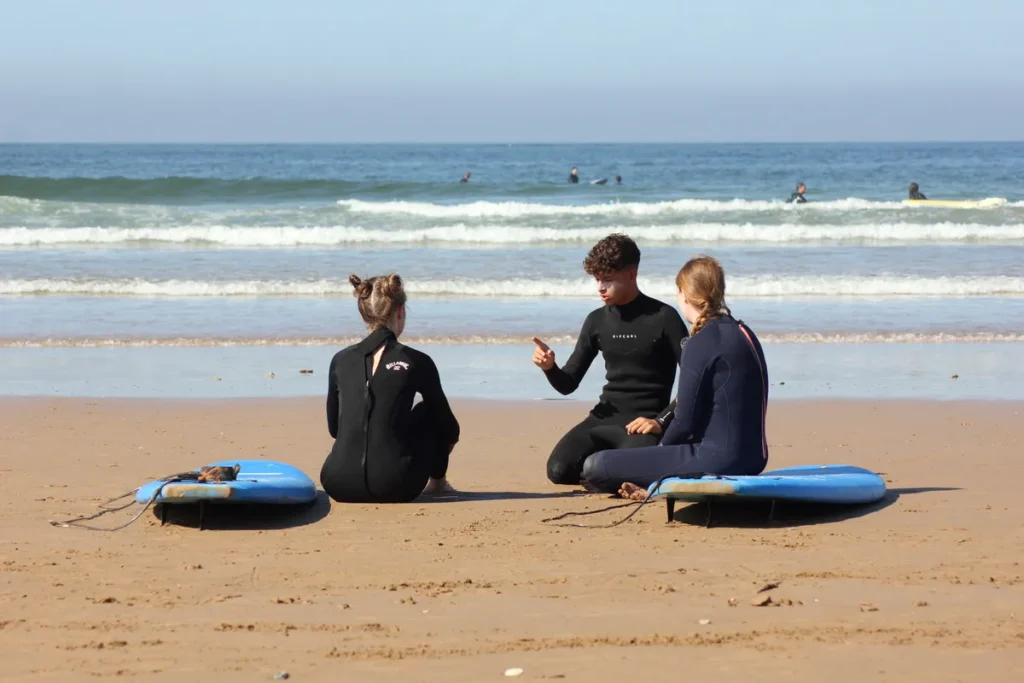
Surf instructor explaining the basics to two students at our all-inclusive surf camp in Morocco

What a Surf Camp in Taghazout Actually Includes

A proper surf camp Taghazout package should cover more than just a bed and a rented board. At Vamo Surf Camp, based in Tamraght in the heart of Taghazout Bay, our packages combine:

  • Daily surf lessons with qualified instructors, matched to your level
  • Surfboard and wetsuit rental, plus free surfing time after lessons
  • Comfortable accommodation and home-style Moroccan meals
  • Transfers to the best spot for the day’s conditions
  • Extras like yoga, sunset hikes and cultural excursions

That structure means you spend your time surfing and enjoying Morocco, not figuring out logistics.

Is Taghazout Good for Beginners?

Yes — this is one of the reasons Taghazout Bay works so well for a surf camp of any level. Spots like Banana Beach and Panorama offer soft, forgiving whitewater that’s ideal for a first lesson, while more experienced surfers can walk or take a short transfer to Anchor Point or Boilers for longer, faster rides. A good instructor will simply choose the right spot for the group each morning.

How Long Should You Stay?

Most surfers find that anywhere from 3 to 7 days is enough to genuinely improve, get comfortable reading the local breaks, and still have time for the region’s other highlights — Paradise Valley, the Agadir souks and the Argan oil villages inland. Longer stays give beginners more repetition and let intermediate surfers work through several different spots in the bay.

Choosing the Right Surf Camp in Taghazout

When comparing options, look for camps that are actually based in or very close to Taghazout Bay (Tamraght, in our case, puts you within a short walk or transfer of most of the bay’s main breaks), offer small instructor-to-student ratios, and are transparent about what’s included — meals, transfers and equipment especially.

Ready to see it for yourself? Browse our surf camp packages and find the option that fits your level, your schedule and your budget.

Before you travel, you can check the waves on the Taghazout surf forecast.
Our surf camp packages

8 Best Things to Do in Taghazout Beyond Surfing

Taghazout Bay isn’t only about the waves. Between surf sessions, there’s a genuinely good list of things to do in Taghazout and the surrounding area — from natural pools inland to markets, hikes and day trips. Here are our favorites.

1. Paradise Valley

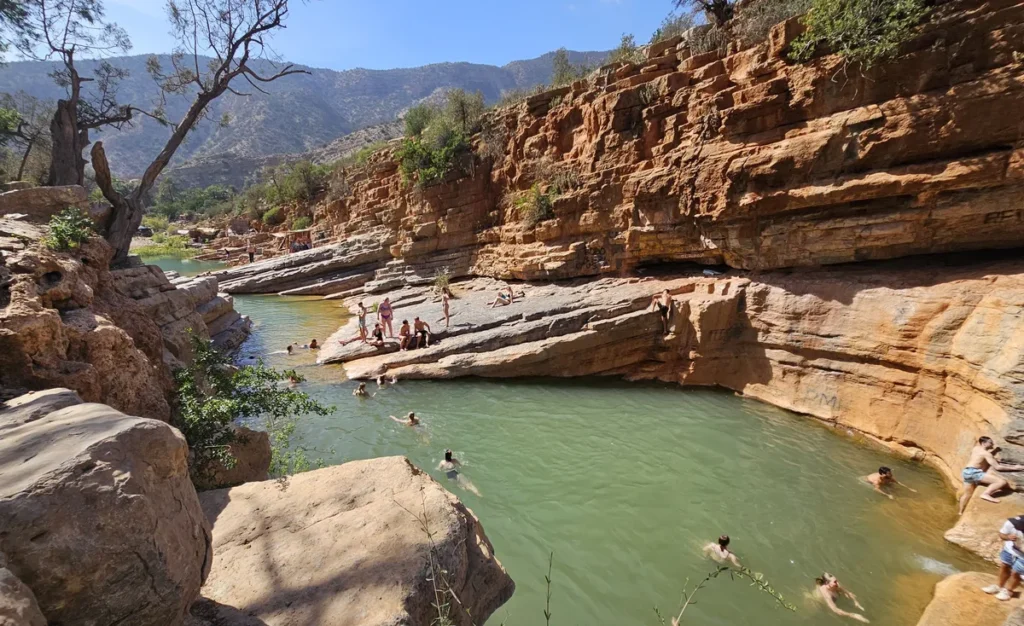
A short drive into the Atlas foothills brings you to Paradise Valley — a series of natural rock pools and small waterfalls surrounded by palm trees. It’s a popular half-day trip for swimming, cliff-jumping (for the more adventurous) and simply cooling off away from the coast.

Paradise Valley natural pools, one of the best things to do in Taghazout

2. Visit an Argan Oil Cooperative

Morocco’s argan trees grow almost exclusively in this region, and a visit to a local women’s cooperative is one of the more interesting cultural stops near Taghazout — you’ll see the traditional, still largely hand-done, process of cracking argan nuts and pressing the oil, and can pick up genuine argan oil and cosmetics directly from the source.

3. Explore Agadir’s Souks

Agadir, about 20–25 minutes south, has a large traditional souk (Souk El Had) with everything from spices and leather goods to clothing and souvenirs. It’s also the closest city for a wider range of restaurants, shops and a proper beachfront promenade if you want a change of scenery from village life.

4. Sunset Hike Above the Bay

The hills behind Taghazout and Tamraght offer an easy hike with sweeping views back over Taghazout Bay — a good way to close out a surf day, especially as the sun drops toward the Atlantic.

5. Yoga

Surfing and yoga tend to go together, and several spots (including most surf camps) run regular sessions — a good way to loosen up sore muscles between sessions and work on the balance and core strength that carries over directly into surfing.

6. Horse Riding on the Beach

Horseback riding along the coastline near Tamraght is a popular half-day activity, and a relaxed contrast to a morning surf lesson.

7. Try a Hammam

A traditional Moroccan hammam and massage is one of the best ways to recover after a few days of paddling — worth building into a longer stay.

8. Just Explore the Village

Taghazout and Tamraght are small enough to wander on foot — rooftop cafés, small surf shops, and fishermen bringing in the day’s catch at the harbor are all part of the everyday scene worth slowing down for.

Planning Your Days Around the Surf

Most of these activities fit naturally around a surf schedule — mornings on the water, afternoons free for an excursion or some rest. Several of them (Paradise Valley, the Argan cooperative, Agadir’s souk, the sunset hike, yoga and horse riding) are already built into our surf camp packages, so you don’t have to plan them separately.

See exactly what’s included in each stay on our surf camp packages page.

Before you travel, you can check the waves on the Taghazout surf forecast.
Our surf camp packages

When Is the Best Time to Surf in Morocco? A Season-by-Season Guide

It’s one of the most common questions we get: when is the best time to surf in Morocco? The honest answer is that Taghazout Bay works year-round — but the type of waves, the crowd, and the weather change quite a bit depending on the season. Here’s what to actually expect.

Autumn and Winter (October–March): Peak Swell Season

This is generally considered the best time to surf in Morocco for consistent, powerful swell. Atlantic storms send regular groundswell into Taghazout Bay, lighting up the region’s famous point breaks like Anchor Point and Boilers. Air temperatures stay mild (around 18–22°C) even in winter, and the water, while cooler, rarely drops below the mid-teens °C — a 3/2mm wetsuit is usually enough. This is also the busiest season for visiting surfers, so lineups at the most famous spots can get crowded.

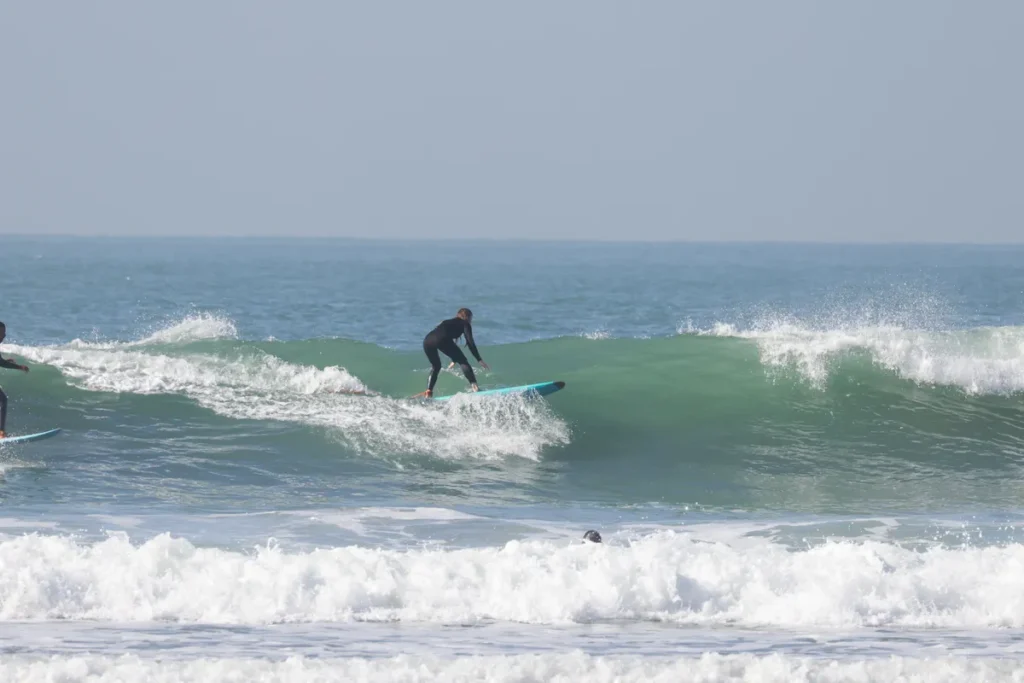
Surfer riding a green wave in Taghazout Bay

Spring (April–May): A Great In-Between

Spring offers a solid middle ground — swell is still reasonably consistent, the water is warming up, and the crowds thin out compared to peak winter months. It’s a good window for surfers who want good waves without the busiest lineups, and pleasant weather for the non-surfing hours too.

Summer (June–September): Smaller Swell, Better for Beginners

Summer swell in Taghazout Bay is generally smaller and less consistent than winter, which actually makes it a great season for beginners and improvers — cleaner, more manageable conditions at the beach breaks, warm water (often no wetsuit needed, or just a spring suit), and long sunny days. Experienced surfers chasing bigger, more powerful waves tend to prefer the autumn/winter window instead.

So, When Should You Book?

It depends on what you’re after:

  • Best overall swell: October to March
  • Best balance of good waves and fewer crowds: April–May and late September
  • Best for beginners and warm-water sessions: June to September

Because Taghazout Bay has such a wide variety of spots — from soft beach breaks to serious reef and point breaks — there genuinely isn’t a bad time to visit. The bay’s range of breaks means instructors can usually find a suitable wave for your level whatever the season.

Surfing Year-Round in Taghazout Bay

At Vamo Surf Camp in Tamraght, we run surf camps throughout the year and adjust each day’s spot and lesson plan to match the season’s conditions and each guest’s level — so whenever you decide to come, the plan is built around what the bay is actually doing that week.

Ready to pick your dates? Take a look at our surf camp packages and find the best fit for your trip.

Our surf camp packages